
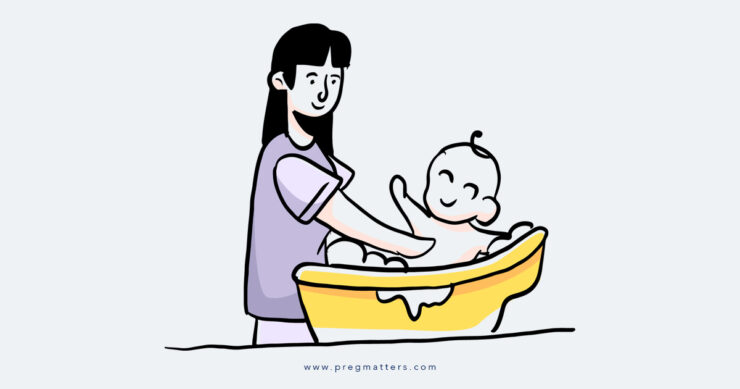
It is understandable to feel a little unsure about holding a wet, slippery newborn. You do not need an elaborate routine or a shelf of products. A warm room, prepared supplies and your full attention are the useful starting points.
Stay with your baby and keep a supporting hand on them throughout the bath. Never leave them alone, even briefly, or ask an older child to supervise. If you need to leave, take your baby with you.
When should your baby have their first bath?
For a healthy, full-term newborn, the World Health Organization recommends delaying the first bath until at least 24 hours after birth. Ask your midwife about your baby’s timing and let them show you a comfortable hold. Babies who are premature, unwell or need particular infection precautions may need a different plan.
Your baby needs to be warm and medically stable before bathing. There is no need to scrub away vernix, the white protective coating sometimes left on newborn skin. The Royal Children’s Hospital neonatal skin-care guidance emphasises stability, a short bath and leaving vernix intact where possible.
How often do newborns need a bath?
Two or three baths a week are usually enough. In between, gently clean your baby’s face, neck folds, hands and nappy area as needed. A daily bath is optional if your baby enjoys it and their skin tolerates it.
You can have a quiet wash with a damp cloth instead of a full bath when you or your baby are not up to it. Keep them wrapped and warm while cleaning one area at a time. Bathing does not have to happen at bedtime or make your baby fall asleep.
1. Get everything within reach
Before undressing your baby, gather a clean towel, soft washcloth, fresh nappy and clothes. If needed, have a mild, fragrance-free, soap-free baby cleanser ready. Plain water is enough for much of the wash; newborns do not need separate shampoo.
Use a clean baby bath on a stable, secure surface, following its instructions. Choose a position where you can support your baby without stretching or losing balance. If you are sore after birth, ask another adult to help with filling, lifting or emptying the bath.
Warm the room, wash your hands and put your phone away. Arrange care for other children beforehand. A bath seat, sling or support cannot prevent drowning and does not replace your hands or attention. Royal Life Saving’s bath-time guidance explains why interruptions are risky.
2. Prepare and check the water
Aim for bath water around 37–38°C, as advised in Pregnancy, Birth and Baby’s newborn bathing guide. Use a bath thermometer and check with your wrist or elbow too: it should feel comfortably warm, not hot.
Run cold water first, then add warm water and mix it thoroughly. Turn off the taps before putting your baby in. Do not add hot water while your baby is in the bath.
Keep the water shallow and follow the bath’s instructions. A particular water depth cannot make a bath safe without constant support and supervision. Keep your baby’s face and airway above the water at all times, and keep them away from taps.
3. Lower your baby in slowly
Support your baby’s head and neck on your forearm, with that hand holding their upper arm. Use your other hand to support their bottom and body while lowering them gently into the water, feet first. Keep the head-and-neck support in place while using your other hand to wash.
If the hold feels awkward, stop and ask your midwife or child health nurse to demonstrate it. It is fine to have another adult beside you for reassurance. If your baby becomes very upset, lift them out safely, wrap them warmly and try again another time.
4. Wash gently, starting with the face
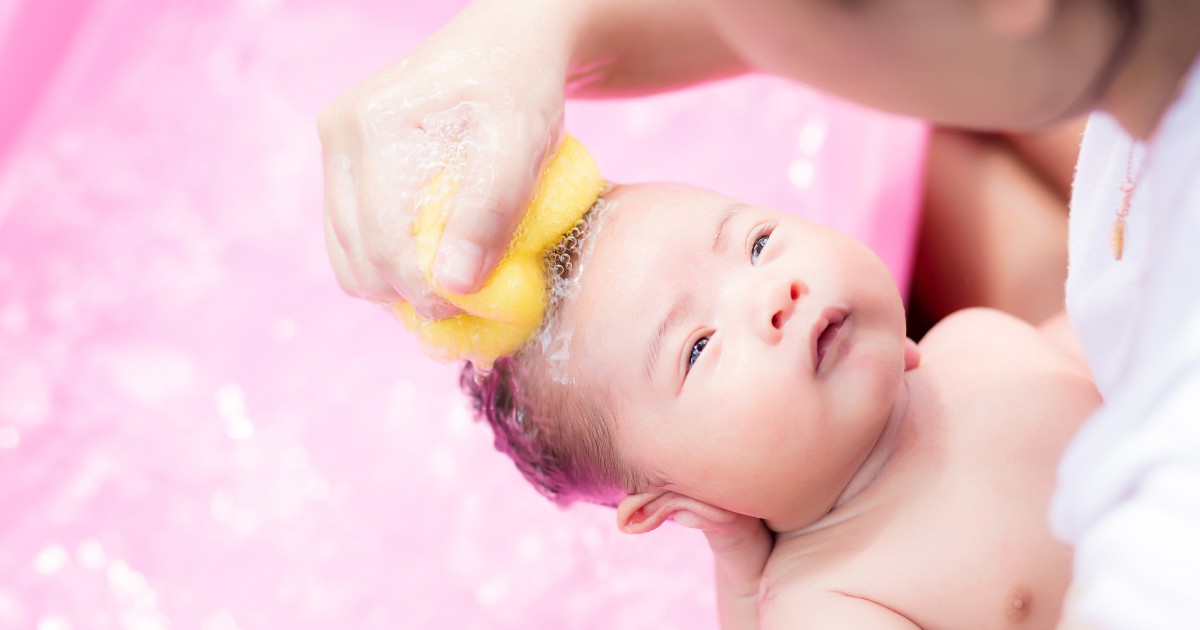
Use plain water for the face. Wipe around the eyes gently with a clean damp cotton pad or clean part of the cloth, moving from the inner corner outwards and using a fresh area for each eye.
Wash the neck, behind the ears, arms, body and legs, paying attention to folds where milk or moisture collects. A little mild soap-free cleanser can be used where needed; rinse it away. Leave the genitals and bottom until last.
Do not scrub, put cotton buds inside ears or use scented oils and powders as part of the routine. If your baby has eczema or another skin condition, ask their clinician which products suit them. The Royal Children’s Hospital skin-care guide has advice on gentle washing and irritation.
5. Lift out, pat dry and dress
Keep supporting your baby’s head and neck, and put your free hand under their bottom before lifting them onto the ready towel. Wrap them promptly and pat the skin dry, including neck, armpit and groin folds. Put on a clean nappy and clothes.
Keep your baby supported on any raised changing surface. If you have forgotten an item, take them with you rather than stepping away. Empty the bath as soon as your baby is safely cared for, and keep young children away from any water left in baths or buckets.
Can you bathe your baby before the cord falls off?
Australian guidance allows gentle washing of the cord stump as part of the usual bath. Use water, then dry the area carefully. If wee or poo gets on it, mild soap and water can help clean it. Do not pull the stump off or apply antiseptics, powders or creams unless your baby’s clinician has told you to.
Keep the nappy folded below the stump so the area can dry. Seek prompt medical advice for spreading redness, swelling, warmth, pus or an unpleasant smell. See umbilical cord care guidance.
A baby under three months with a temperature of 38°C or higher needs urgent medical assessment at a hospital emergency department. Seek urgent help too if your newborn feeds poorly, is unusually sleepy or seems unwell. Call 000 if they are difficult to wake, have severe breathing trouble or turn blue.
If something goes wrong in the bath
Remove your baby from the water immediately. If they are unresponsive or not breathing normally, call 000 and start CPR, following the emergency operator’s instructions. A baby involved in a drowning incident needs medical assessment even if they seem to recover. Read Healthdirect’s water-safety advice and consider an infant first-aid course before you need it.
For a scald, cool the affected skin under cool running water for 20 minutes while keeping the rest of your baby warm, and get urgent medical help. Do not use ice, creams or home remedies. Do not pull away clothing stuck to the burn. The NSW burn first-aid guide explains the immediate steps.
When bath time is finished, a cuddle and a simple routine are enough. For more on early care, see your baby’s first hours after birth.