At 5 weeks pregnant, a missed period or positive test may be making the pregnancy feel more real. Sore breasts, tiredness, nausea and needing to wee more often can appear around now. There is no set number of symptoms you should have.
How 5 weeks is counted
Pregnancy weeks are usually counted from the first day of your last period, not conception. With a typical 28-day cycle, 5 weeks pregnant is roughly 3 weeks after conception. Cycle variation can change this estimate.
Your baby’s development at 5 weeks
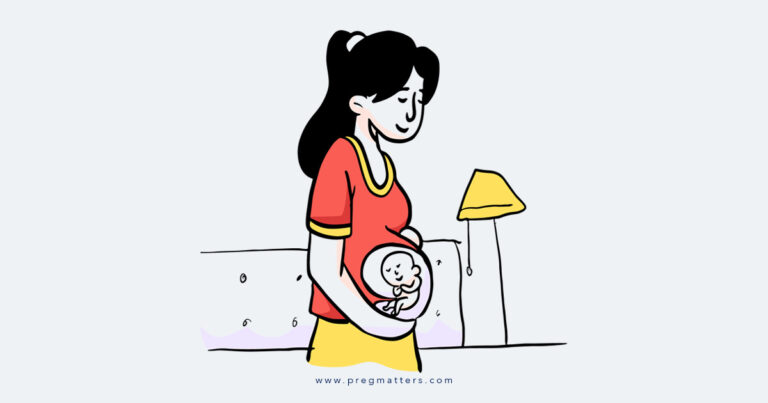
The embryo’s early brain and spinal cord are beginning to develop. The heart and blood vessels are also forming. These are early structures with a great deal of development ahead of them. Describing what is developing this week does not tell you what an ultrasound will show on a particular day.
Symptoms and body changes
Your breasts may feel fuller or sore, and you may need more rest. Nausea can happen at any time, despite the name “morning sickness”. You may also notice that you need to pass urine more often. These changes are possible, rather than compulsory.
Having few symptoms does not by itself mean something is wrong. Equally, symptoms cannot confirm where the pregnancy is growing or how it is progressing. If a change worries you, ask your clinician rather than trying to diagnose it from a checklist.
Practical care for this week
If food smells make you queasy, try smaller meals and foods you can tolerate. Cold food may be easier than a hot meal with a strong smell. Keep drinks within reach and rest when you can. If nausea is disrupting eating or daily life, ask about treatment rather than waiting for it to become severe.
Continue folic acid through the first trimester. An iodine supplement of 150 micrograms a day is generally recommended during pregnancy, but get advice first if you have a thyroid condition. Ask a pharmacist to check your supplement labels so you are not unintentionally taking two of the same product.
Appointments and early testing
If you have not booked your first appointment, contact your GP, midwife or maternity service. Bring the date your last period began, if you know it, and a list of medicines and supplements. Mention previous pregnancies and any ongoing health conditions.
An ultrasound is not automatically needed this week. Your clinician may arrange earlier investigations because of symptoms or your history. If a scan cannot yet locate the pregnancy, follow-up is important: being too early is one explanation, but miscarriage and ectopic pregnancy also need to be considered. Do not use another person’s scan result as a timetable for your own.
When to seek medical help
In Australia, call 000 for severe abdominal pain, heavy bleeding, fainting, collapse or feeling very unwell. Go to an emergency department immediately for shoulder-tip pain, one-sided or worsening lower abdominal pain, or dizziness. An ectopic pregnancy can cause internal bleeding without heavy vaginal bleeding. Do not wait for a positive test or your next appointment. Do not drive yourself if faint or unwell.
Contact your GP or midwife straight away for other bleeding or cramps. Seek urgent medical help if vomiting means you cannot keep fluids down, or you have fever. If your usual clinician is unavailable, seek urgent care rather than waiting.
Read more about bleeding in early pregnancy and possible miscarriage symptoms. Symptoms need assessment; they do not establish a diagnosis on their own.
Where to go next
Previous: 4 weeks pregnant · Next: 6 weeks pregnant · Planning your prenatal care
This is general information for Australian readers, not a diagnosis or a personalised care plan.
Sources and further reading
- Pregnancy, Birth and Baby: pregnancy at week 5
- Pregnancy, Birth and Baby: early signs and pregnancy dating
- Pregnancy, Birth and Baby: appetite changes and food aversions
- Food Standards Australia New Zealand: iodine and pregnancy
- Pregnancy, Birth and Baby: folate and pregnancy
- Queensland Health: ectopic pregnancy
- Healthdirect: ectopic pregnancy
- Healthdirect: warning signs during pregnancy
- The Royal Women’s Hospital: bleeding in early pregnancy
- Pregnancy, Birth and Baby: morning sickness