
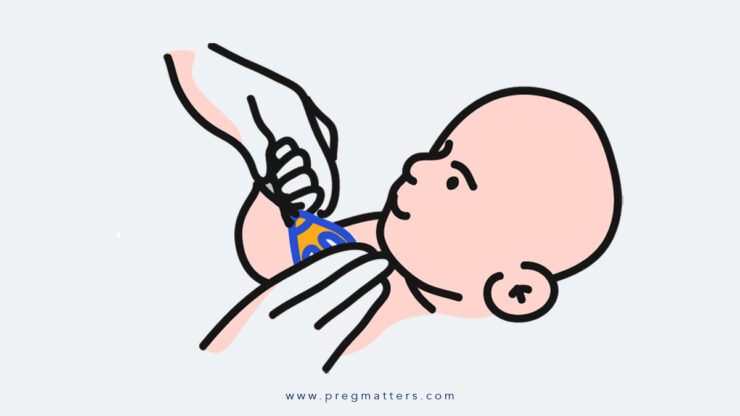
The best way to trim baby nails is to work slowly, in good light, when your baby is settled. A soft emery board may be enough for a sharp edge; baby nail clippers or small, round-ended baby scissors are other options.
You do not have to finish both hands and feet in one sitting. If your baby starts wriggling or you cannot clearly see the nail, put the tool down and try again later.
When do baby nails need trimming?
Check for long or sharp edges rather than following a fixed weekly schedule. Newborn nails are soft, and some wear down on their own, but they can still scratch the skin.
A calm, drowsy or sleeping baby may be easier to manage. After a bath can also work if your baby is comfortable and still. There is no need to wait a particular number of minutes for a sleep stage.
How to trim your baby’s nails
- Set up first. Have your clean nail tool ready and choose a well-lit place where you can support your baby securely. Another adult can help by holding and comforting them.
- Steady one finger. Gently move the fingertip pad away from the nail so you can see where the skin ends.
- Take off only the sharp edge. Make small, careful trims without cutting close to the skin. Use a soft file to smooth a rough edge if needed.
- Keep toenails straight across. Avoid cutting into the corners or digging down the sides.
- Pause whenever you need to. One or two nails now and the rest later is a reasonable way to get it done.
Put clippers, scissors and other small items out of reach as soon as you finish. Do not bite your baby’s nails to shorten them; this can pass an infection to the skin around the nail.
Keeping the experience manageable
Try talking or singing softly, and let another adult help if holding your baby and using the tool feels awkward. If you feel rushed or tense, stop for a moment. There is no benefit in pushing through while either of you is struggling.
A simple file is a useful option if you are not comfortable with clippers. You can also ask your midwife or child and family health nurse to show you how to hold a tiny finger safely. Our new baby supplies checklist covers other everyday care items without an extensive shopping list.
What if you accidentally nick the skin?
Stop trimming and press a clean, soft cloth or gauze pad against the cut until the bleeding stops. Keep holding the pad yourself. Once the bleeding has stopped, gently rinse the small cut with clean water.
Do not leave a sticking plaster or loose dressing on your baby’s finger: they could suck it off and choke. If the cut needs protection, ask a health professional how to cover it safely.
Get prompt medical help if bleeding does not stop with pressure, the cut is deep or gaping, or you are worried about the injury. Call 000 for severe bleeding.
When to ask about a nail problem
Have a GP check increasing redness or discolouration, swelling, warmth, pus or pain around a nail. Do not squeeze the area, cut into swollen skin or try to dig out an ingrown nail.
If your baby seems unwell, seek medical advice promptly. If they are 3 months or younger and have a temperature of 38°C or higher, take them to the nearest emergency department immediately. For non-emergency health advice in Australia, you can call Healthdirect on 1800 022 222.
Sources and further reading
- Raising Children Network: cutting baby nails and nail problems
- Healthdirect: wounds, cuts and grazes
- American Academy of Pediatrics: nail care for babies
- Healthdirect: fever in children and when to seek care
This is general care information, not an assessment of your baby’s skin or nails. Ask a health professional if something does not look right.