
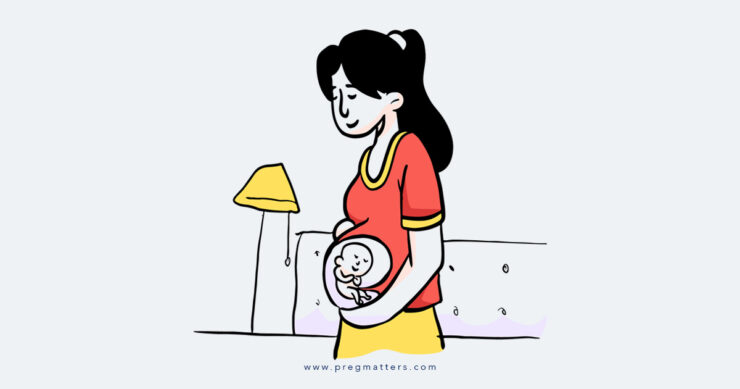
Before birth, a baby receives oxygen through the placenta and umbilical cord. Their lungs contain fluid and are developing, rather than taking in air as they will after birth. Breathing-like movements in the womb are part of development, not evidence that the baby is breathing air.
How oxygen reaches your baby
When you breathe, oxygen enters your lungs and then your blood. At the placenta, oxygen passes into your baby’s circulation and travels through the umbilical cord. Carbon dioxide travels back towards the placenta so your body can remove it.
The cord carries blood, not air. The baby does not draw a breath through the cord, and their mouth is not connected to your lungs. The placenta and circulation provide the oxygen supply before birth.
What are the lungs doing before birth?
The lungs develop throughout pregnancy and continue maturing after birth. Babies make breathing movements before they are born, sometimes visible during an ultrasound. These movements occur while the lungs contain fluid; they are different from the air breathing needed outside the uterus.
You do not need to watch your belly for a breathing rhythm or teach your baby to breathe. An ultrasound observation is interpreted by the clinical team in context, rather than used as a home test of lung readiness.
What changes at birth?
With the first breaths, air begins entering the lungs. Lung fluid moves into the surrounding tissue and is then absorbed, while blood flow through the lungs increases. This transition allows the lungs to take over oxygen exchange.
The change is more complex than the baby being squeezed through the birth canal. Babies born by caesarean also make the transition to air breathing. It is not correct to say that breaking the waters exposes the baby to air or makes them start breathing air inside the uterus.
Midwives and doctors assess breathing and the baby’s condition after birth. Some babies need help with the transition. If a baby is not breathing effectively, the team may need to act quickly; an attached umbilical cord is not a reason to delay necessary breathing support.
What if a baby is born early?
Premature babies may have less mature lungs and need specialist breathing support. The type of help depends on how early they are born and their condition. If preterm birth seems likely, the maternity team may recommend treatments before birth and care in a hospital with appropriate newborn services.
Premature birth has many possible causes and is not always preventable. It should not be blamed on a parent’s breathing, diet or ability to relax. Do not start medicines or supplements to “mature” a baby’s lungs without specialist advice.
Can you tell whether your baby has enough oxygen?
You cannot measure your baby’s oxygen supply by how breathless you feel, by hiccups or by listening with a home Doppler. A heartbeat heard at home does not replace a professional assessment when something worries you.
If your baby’s movements become less, stop or change from their usual pattern, contact your maternity unit immediately. Do not wait overnight or try food, a cold drink or a home monitor before asking for help. If you cannot reach the team, go to the nearest maternity service or emergency department.
Seek urgent care for bleeding, significant abdominal pain, suspected waters breaking or possible labour before 37 weeks. If you have sudden or severe breathing difficulty, chest pain or collapse, call 000 in Australia. Your breathing symptoms deserve assessment in their own right.
After your baby is born
Call 000 if your baby is struggling to breathe, has blue or grey lips, becomes unresponsive or is very difficult to wake. While still in hospital, alert staff immediately. Do not assume breathing trouble is simply part of adjusting to life outside the womb.
This is general information for Australian readers. Your maternity or newborn team can explain any concerns about your baby’s breathing or development.
Related reading
Our labour and birth guide explains signs, stages and when to contact your maternity team.
Sources and further reading
- Pregnancy, Birth and Baby: the placenta
- Australian and New Zealand Committee on Resuscitation: newborn transition and resuscitation
- UNSW Embryology: respiratory system development
- Better Health Channel: pregnancy week by week
- Queensland Health: preterm labour and birth
- Safer Baby: your baby’s movements matter
- Therapeutic Goods Administration: home-use fetal Dopplers
- Royal Children’s Hospital: recognising an unwell newborn or young infant
- Healthdirect: warning signs during pregnancy