
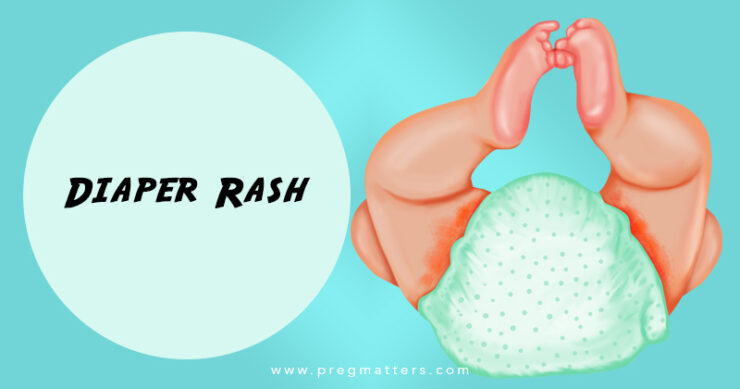
Nappy rash, also called diaper rash, is sore or inflamed skin where a nappy sits. It is common and often starts with irritation from moisture, wee, poo and rubbing. It can happen despite attentive care, and it does not automatically mean your baby has a fungal infection.
What you might notice
The skin may look raw, patchy or swollen and be sore when cleaned. Redness can be more obvious on lighter skin; on darker skin, inflammation may look brown, purple or grey. Changes in texture, warmth, swelling and your baby’s discomfort matter too.
Simple irritation often affects skin touching the nappy. A rash in the folds, blisters, pus, crusts or a rash elsewhere can have another cause. Appearance alone is not a reliable home diagnosis: a clinician can check for thrush, bacterial infection or another skin condition.
Gentle care at each change
- Change promptly. Check frequently and change a wet or dirty nappy as soon as you notice it, especially after a poo.
- Clean softly. Use lukewarm water with cotton wool or a soft clean cloth. Avoid rubbing or scrubbing sore skin. Wipes may sting or irritate during a rash, so use water instead.
- Dry gently. Pat rather than rub, or let the skin air-dry.
- Add a barrier. Apply a thick layer of a simple zinc-based or petroleum jelly barrier product at each change. Remove visible soiling gently; you do not need to scrub away every trace of the previous layer before topping it up.
Ask a pharmacist or child health nurse if you are unsure which plain barrier product to choose. More ingredients or a stronger smell do not mean better protection. Stop a new product and seek advice if it appears to make irritation worse.
Reduce rubbing and trapped moisture
Choose a nappy that fits without rubbing tightly. Absorbent disposable nappies can be helpful while the skin heals. If you use cloth nappies, change them promptly, use an absorbent insert and rinse detergent out thoroughly. Avoid plastic overpants that hold moisture against the skin.
Offer short, supervised nappy-free periods while your baby is awake, on a washable mat at floor level. Keep them comfortably warm. Do not leave them unattended on a changing table or add towels and loose layers to their sleeping space as a rash treatment.
Avoid talcum or other powders, antiseptics, fragranced soap and bubble bath on the sore area. Natural plant or food oils can also irritate skin; “natural” does not guarantee a product will suit a baby.
When to get the rash checked
Arrange medical advice sooner if the rash is severe, spreading, very painful, blistered, crusted, bleeding or has pus, or your baby is distressed or feeding poorly. A fever with a rash needs assessment; do not assume it is caused by the nappy irritation.
If mild irritation is not improving with gentle care, ask your pharmacist, nurse or GP for help. See your GP if it has not improved within a week, and earlier if it worsens. Recurrent or unusual rashes also deserve review rather than repeated trial-and-error treatment.
Tell the clinician when it started, what products you have used, whether there is diarrhoea and whether your baby has recently taken antibiotics. Bring the product names or packets. They may examine other areas of skin or sometimes take a swab.
Use medicated creams for a specific reason
Some rashes need an antifungal, a short course of a suitable steroid cream or treatment for bacterial infection. These are different treatments for different problems. Do not choose an adult steroid cream, combine medicated products or use leftover treatment without advice from a doctor or pharmacist.
If treatment is prescribed, check where to apply it, how often, how long to use it and when to return if it is not helping. Continue the gentle skin care your clinician recommends. Do not restrict your baby’s milk feeds or fluids to keep the nappy drier.
When your baby needs urgent help
Call 000 if your baby is struggling to breathe, has blue or grey lips, is unresponsive or very difficult to wake, collapses or has a seizure.
A temperature of 38°C or above in a baby under 3 months needs urgent medical assessment. Take a newborn with fever to a hospital emergency department; for an older baby under 3 months, go to emergency if you cannot get prompt medical care. Do not wait to see whether fever medicine helps. A baby can be seriously unwell without a fever.
Seek urgent care for green vomit, markedly reduced feeding, unusual floppiness or sleepiness, or much fewer wet nappies than usual. A sudden, persistent or very different cry also needs prompt assessment, especially if your baby seems in pain or unwell.
This is general information for Australian families. A GP or child health professional can assess a rash that is severe, persistent or difficult to identify.