
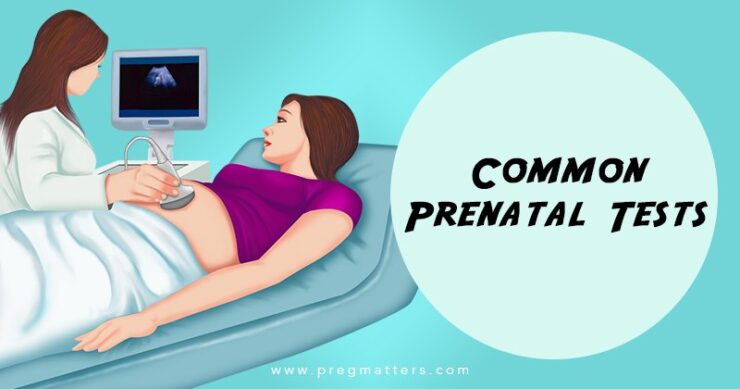
During pregnancy, you will be offered blood tests, urine tests and ultrasound scans to check your health and your baby’s development. Some are recommended routinely; others depend on your medical history or a result that needs a closer look. Your midwife or doctor should explain each test and help you decide whether to have it.
The timing below is a general guide for Australia. Ask your care team for your own schedule, including any earlier or additional testing you need.
Screening and diagnosis: what is the difference?
A screening test estimates the chance of a particular condition. A higher-chance result does not prove that your baby has that condition, and a lower-chance result cannot rule out every problem.
A diagnostic test can provide a more definite answer about the specific conditions being tested. Even diagnostic testing cannot tell you everything about your baby’s future health. Before agreeing to a test, ask what it can find, what it cannot find and what the possible results might mean for you.
Tests offered early in pregnancy
Early blood tests commonly check your blood group and antibodies, look for anaemia, check rubella immunity and screen for infections such as hepatitis B, hepatitis C, HIV and syphilis. A urine sample can check for bacteria even if you have no urinary symptoms. Other tests are offered according to your history and circumstances.
You may be offered a dating ultrasound to help estimate how many weeks pregnant you are. Your clinician will discuss when it is useful, particularly if your dates are uncertain. You can also ask about genetic carrier screening, which looks for certain inherited conditions in prospective parents and is different from screening the pregnancy for chromosome conditions.
Screening for chromosome conditions
Discuss screening early so there is time to consider the options and book within the relevant window. Before NIPT, an early ultrasound is recommended to confirm pregnancy dating, the number of babies and that the pregnancy is ongoing.
- Non-invasive prenatal testing (NIPT): a blood test available from 10 weeks that analyses DNA fragments mainly from the placenta. It screens for selected chromosome conditions, commonly including Down syndrome, Edwards syndrome and Patau syndrome. It is a screening test, not a diagnosis.
- Combined first-trimester screening: combines a blood test with information including a nuchal translucency ultrasound, generally performed between 11 weeks and 13 weeks plus 6 days. The blood sample may be taken earlier. Ask the service for its booking window.
Your clinician can help you choose a screening approach rather than simply ordering every test. A higher-chance NIPT result should be discussed with a specialist and confirmed with diagnostic testing before making irreversible pregnancy decisions. An inconclusive or “no result” test needs follow-up too. NIPT does not replace ultrasound assessment of your baby’s anatomy.
If the first-trimester window has passed, ask what options remain. Depending on your circumstances, second-trimester serum screening or other testing may still be available.
Diagnostic tests: CVS and amniocentesis
Chorionic villus sampling (CVS) takes a small sample of placental tissue. It is generally performed in the first trimester from 11 weeks. Amniocentesis takes a sample of fluid surrounding the baby and is performed from 15 weeks.
These procedures can diagnose particular chromosome or genetic conditions. They carry a small risk of miscarriage and other complications. A specialist or genetic counsellor can explain the expected information, limitations, procedure-related risks and alternatives in your situation. You can choose whether to proceed.
The mid-pregnancy ultrasound
The morphology, or fetal anatomy, scan is usually offered around 18–22 weeks. It looks in detail at your baby’s anatomy and also checks features such as growth and the position of the placenta. It cannot detect every condition. Occasionally another scan or specialist assessment is needed to complete or clarify the findings.
Testing later in pregnancy
- Gestational diabetes: an oral glucose tolerance test is usually offered at 24–28 weeks. In Australia, this generally uses a 75 g glucose drink with blood samples before the drink and at one and two hours afterwards. Follow the laboratory’s fasting and preparation instructions. Tell the team if you cannot tolerate the drink or have a condition that affects testing. Some people need earlier testing.
- Anaemia and antibodies: repeat blood tests are commonly arranged around 28 weeks. Your clinician will explain any follow-up needed, including care related to a rhesus-negative blood group.
- Syphilis: national guidance recommends testing at the first antenatal visit, 26–28 weeks, and 36 weeks or birth, whichever comes first. Some situations require additional tests.
- Group B streptococcus (GBS): depending on your maternity service’s approach, you may be offered a swab around 35–37 weeks. A positive result helps the team plan care during labour to reduce the chance of infection in your baby.
Extra growth scans or heart-rate monitoring may be recommended for a particular concern. They are not a fixed requirement for every uncomplicated pregnancy.
Questions worth asking before a test
- What decision could this result help us make?
- What are the benefits, possible harms and alternatives, including not testing?
- Is there a deadline for booking, and what will I need to pay?
- Who will explain the results, and when should I contact you if I have not heard?
- What support is available if the result raises a concern?
You can ask for more explanation or time to think, while checking whether timing matters. A genetic counsellor can help you understand results and options without making the decision for you.
Do not wait for a scheduled test if you feel unwell
Contact your maternity service promptly for new concerns. Seek immediate assessment for bleeding, severe pain, fever or fluid loss after CVS or amniocentesis. At any stage, a concern about your baby’s usual movements needs immediate contact with your maternity unit. A reassuring earlier test does not replace assessment of new symptoms. Call 000 in Australia for a medical emergency.
For the wider care plan, see regular prenatal care and choosing a maternity care team.
This is general information for Australia, not an individual testing recommendation.
Sources and further reading
- Healthdirect: routine antenatal tests
- RANZCOG: screening and diagnosis of fetal structural anomalies and chromosome conditions
- Pregnancy, Birth and Baby: prenatal screening
- RANZCOG: chorionic villus sampling
- Pregnancy, Birth and Baby: amniocentesis
- Healthdirect: gestational diabetes
- Australian Government: health tests during pregnancy