
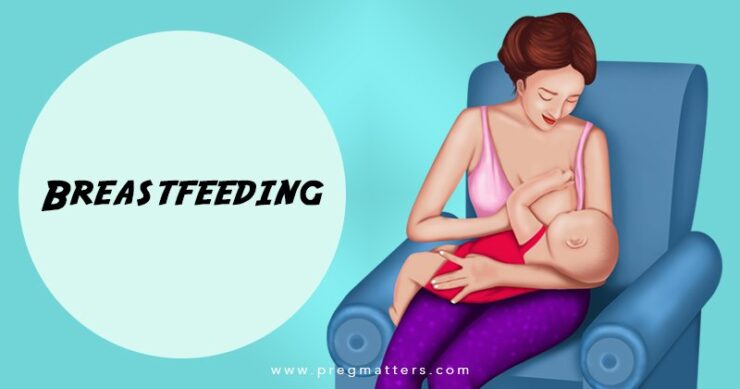
If you hope to breastfeed, useful preparation is mostly about learning what to expect and knowing where to find help. You do not need to buy every feeding accessory, toughen your nipples or prove that you have the right attitude.
Breastfeeding is something you and your baby learn together. A plan can give you a starting point while leaving room for your health, your baby’s needs and your choices after birth.
Learn a little about the early days
A class, a reliable video or a conversation with a midwife can make the first feeds feel less unfamiliar. Ask about feeding cues, attachment, normal changes in milk production and how your baby’s intake will be checked. You do not need to memorise a feeding timetable.
Colostrum is the first milk your breasts make. Newborn feeds are frequent, including at night, and the pattern can change through the day. Ask how to recognise a baby who is feeding effectively and when sleepiness or poor feeding needs assessment. Our breastfeeding guide explains those early checks.
Talk about your own circumstances
Tell your midwife about previous breast surgery, a difficult feeding experience, any health conditions and medicines you take. If your baby may arrive early or need specialist care, ask how feeding and expressing would be supported. You can ask for a lactation consultation during pregnancy.
Do not stop prescribed medicines or assume breastfeeding is impossible because you take them. A doctor or pharmacist can check the particular medicine and your situation.
If you have flat or inverted nipples, ask for individual advice. Breast shells, pulling exercises and roughening the skin are not a preparation checklist. Nipples do not need to be made tougher.
Ask before expressing during pregnancy
Some people are advised to hand-express colostrum late in pregnancy, but it is not suitable for everyone. Ask your maternity team whether to do it, when to start, how to collect and store milk, and what symptoms mean you should stop and contact them.
Do not begin antenatal pumping or expressing from a general online schedule. How much colostrum you can collect before birth does not tell you how much milk you will make afterwards. The Australian Breastfeeding Association explains antenatal expressing.
Make a short feeding plan
Discuss what you would like with your birth team. Useful questions include:
- Can you support skin-to-skin contact and an early feed if we are both well?
- Who can help me with attachment, including overnight?
- If we are separated, who will help with expressing and feeding?
- If extra milk is recommended, why is it needed, what are the options and how will we review the plan?
- How can I get help after going home?
Consent and clear explanations matter. A plan should also allow prompt treatment when your baby needs it. Supplementary feeds, if needed or chosen, do not have to mean the end of breastfeeding.
Keep equipment simple
Comfortable clothing, a drink within reach and support for your back and arms can be enough to begin. A breastfeeding pillow is optional. It must not cover your baby’s face or become somewhere to leave them sleeping.
If you expect to express regularly, ask which pump and breast-shield fit would suit you. There is no need to buy an expensive pump just in case; some families find hand expressing useful, while others need a pump for their particular plan.
Arrange practical help
Tell a support person what would actually help: bringing food, handling visitors, doing the washing or staying nearby while you learn a new position. You can ask people to check before touching your breasts or moving your baby during feeding support.
Save the numbers for your maternity service and child and family health nurse. The Australian Breastfeeding Association offers breastfeeding counselling on 1800 686 268. A counsellor can support you, but an unwell baby needs medical assessment.
After birth, ask for help early with ongoing nipple pain, a baby who cannot attach or concerns about milk intake. A baby who is very difficult to wake, struggling to breathe or turning blue needs emergency help: call 000. Do not wait for a feeding appointment.
You can explore comfortable breastfeeding positions before birth, then ask someone to help you try them with your baby. Preparation is there to support you, not to set a standard you must live up to.
Sources and further reading
- Australian Breastfeeding Association: preparing during pregnancy
- Australian Breastfeeding Association: a feeding plan
- Australian Breastfeeding Association: early-days preparation
- Australian Breastfeeding Association: choosing and using a pump
- Healthdirect: medicines and breastfeeding
- Healthdirect: early newborn health
General Australian information. Your maternity team can help you plan around your health and your baby’s needs.