
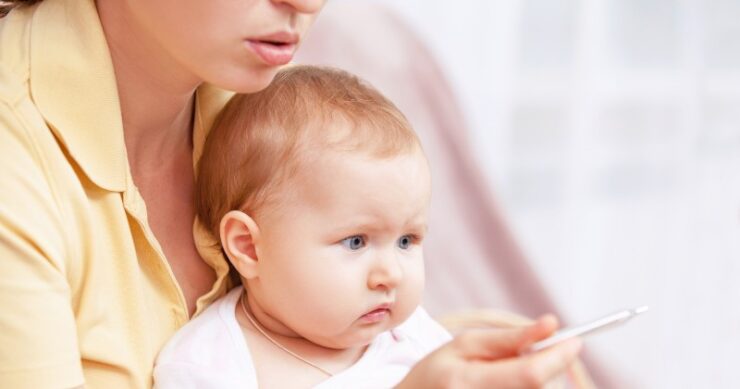
A temperature of 38°C or higher is a fever. With a baby, the next step depends on their age and how they are behaving, feeding and breathing, as well as the number on the thermometer.
If your baby is 3 months old or younger and their temperature reaches 38°C, take them to the nearest emergency department immediately. Do not wait for another symptom, a routine appointment or a medicine to bring the temperature down.
When to get emergency help
Call 000 if your baby is unresponsive, is unusually difficult to wake, is struggling to breathe, has a stiff neck or is having a seizure for the first time. Serious illness can occur without a high temperature, so do not wait for a fever before getting help for these signs.
For an older baby with fever, seek medical assessment straight away if they are feeding poorly, have fewer wet nappies, keep vomiting, develop a new rash or a bulging soft spot on the head, seem in significant pain or are becoming more unwell. Seek assessment straight away for a fever above 40°C or lasting more than two days, too. Seek help earlier whenever you are concerned, especially if your baby has an underlying condition or an individual care plan.
Healthdirect’s fever guide explains the Australian urgent-care pathways. Phone advice should not delay emergency care.
How to check your baby’s temperature

A digital thermometer used under the arm is a suitable starting point for a young baby. Place it as the manufacturer directs, with the armpit dry and the arm held gently against the body. Ask your midwife, child health nurse or pharmacist to demonstrate if you are unsure.
Touching a forehead cannot reliably measure a fever. Readings can also differ between devices and body sites, so record the method as well as the result. Do not add or subtract degrees yourself. Avoid mercury thermometers, and do not attempt a rectal measurement unless a health professional has specifically shown you an appropriate method.
More detail is available in Healthdirect’s thermometer guide.
What a fever can tell you

Fever is often part of the body’s response to an infection. It does not tell you which infection is present or how serious it is. A clinician may need to examine your baby and, particularly in a young infant, arrange tests.
Look at the whole picture: are they responding to you, taking feeds, passing urine and breathing comfortably? A lower reading after medicine does not replace that assessment. If a fever follows vaccination, still follow age-based advice and any instructions from your vaccination provider.
Comfort while following medical advice

For a baby who has been assessed as suitable for care at home, small practical steps can help:
- Offer their usual breastmilk or formula regularly. Get advice if feeds are much smaller than usual or they cannot keep them down.
- Keep the room comfortable and use light, comfortable clothing. Avoid overheating with extra layers.
- Check on your baby and notice changes in breathing, alertness, feeding and wet nappies.
- Allow rest without assuming that an unusually sleepy or hard-to-wake baby simply needs more sleep.
Do not use cold baths, alcohol rubs or sponging to force the temperature down. Do not replace a young baby’s milk feeds with plain water or dilute their formula.
Fever medicine is mainly for discomfort. Check with a doctor or pharmacist that a product is suitable for your baby’s age and weight, and follow its instructions. Do not use adult products, give aspirin or combine medicines without advice. Do not give ibuprofen to a baby under 3 months or to a baby who is dehydrated. For a baby needing urgent assessment, treatment at home must not delay leaving for care.
What to tell the doctor
It helps to have your baby’s age, temperature and measurement method, when the illness began, recent feeds and wet nappies, and any other symptoms ready. Tell the clinician about medicines already given, recent vaccinations, prematurity and existing health conditions.
If diarrhoea is part of the illness, see our guide to diarrhoea in babies. If you are unsure what to do and there are no emergency signs, Healthdirect’s registered nurses can advise on 1800 022 222.
Sources and further reading
- Healthdirect: Fever in babies and children
- Healthdirect: Fever in children
- Royal Children’s Hospital: Fever in children
- Healthdirect: Types of thermometer
- Healthdirect: Medicine safety, including ibuprofen and dehydration
General information for Australian readers. It does not replace an examination or your baby’s individual care plan.