
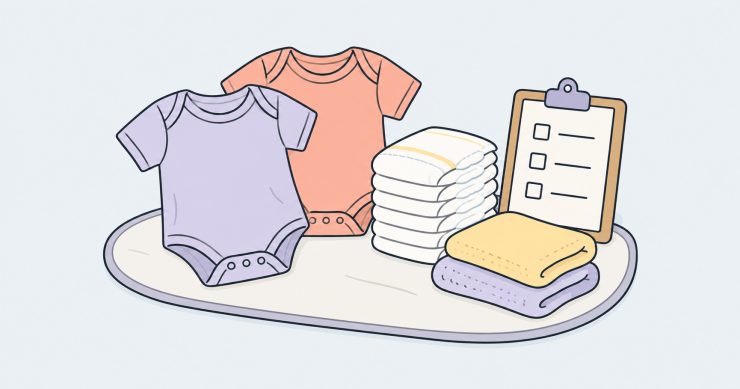
You do not need to have every baby product before your baby arrives. Start with somewhere safe for them to sleep, nappies, everyday clothes, a feeding plan and a safe way to travel home. The extras can wait until you know what works for your family.
Use this checklist as a starting point, rather than a shopping target. How much you need will depend on your budget, the weather and how often you can wash and dry clothes.
A safe place to sleep
- A cot or bassinet that meets the current Australian safety requirements, assembled exactly as instructed.
- The firm, flat mattress specified for that cot or bassinet, with a close-fitting sheet and a spare for washing.
- Suitable sleep clothing. If you use a baby sleeping bag, choose one that fits securely at the neck and chest, leaves the arms out and has no hood.
Place your baby on their back for every sleep, with their head and face uncovered. Keep pillows, cot bumpers, doonas, soft toys and loose bedding out of the sleep space. Red Nose recommends a separate, safe sleep space in your room for at least the first six months. See its safe sleep guidance for the full recommendations.
Before accepting a second-hand cot, check its condition, instructions and recall history. The ACCC cot guide explains what to look for. A baby does not need a decorative bedding set.
Nappy-changing supplies
- A small starting supply of newborn nappies, or cloth nappies and the supplies needed to wash them.
- Soft cloths and water, or suitable unscented baby wipes.
- A washable change mat, spare clothes and somewhere to put used nappies.
Keep everything within reach before you begin. If you use a raised change table, keep a hand on your baby and never leave them alone, even briefly. Changing on a mat on the floor avoids the risk of a fall from a table. Read the ACCC bathing and changing advice.
Clothes and washing
A small collection of easy-to-open bodysuits and all-in-one suits is a practical place to start. Add socks and layers for cooler weather, and keep a spare outfit where you change nappies. It is worth having a few clothes in the next size up rather than buying everything in newborn size.
For washing, gather a towel, soft washcloths and a suitable baby bath or other safe bathing set-up. A bath seat or support does not make it safe to leave a baby alone. Stay with your baby and keep a hand supporting them throughout the bath; if you need to leave, take them with you.
Feeding supplies that suit your plans
Set aside a comfortable place to sit, a water bottle for you and a few clean cloths for spills. If you plan to breastfeed, easy-access clothing, a comfortable bra and breast pads may be useful. You do not have to buy a breast pump before birth unless you already have a reason to need one.
If you expect to use bottles, ask your midwife about the equipment you will need and how to clean and sterilise it. If you plan to use formula, include the appropriate infant formula in that conversation. Feeding support is useful whichever approach you take.
Getting home and getting out
If you are travelling by car, have an approved rear-facing child restraint suitable for a newborn correctly installed before the journey home. Learn how to adjust the harness, and arrange a fitting check if you are unsure. Pregnancy, Birth and Baby explains how to choose and use a child car seat.
A bag you already own can hold nappies, wipes, spare clothes and feeding supplies. Choose a pram or carrier later if you are still working out what suits your home and daily travel.
A few things for you
Put comfortable clothes, maternity pads, easy meals and important contact numbers within reach. If someone asks what you need, a meal, a grocery run or help with laundry may be more useful than another outfit.
For the next steps, see what to bring to hospital for birth and getting ready for your baby.