
Pregnancy Week By Week
- 4 Weeks Pregnant: Development, Symptoms and Care
- 5 Weeks Pregnant: Development, Symptoms and Care
- 6 Weeks Pregnant: Development, Symptoms and Care
- 7 Weeks Pregnant: Development, Symptoms and Care
- 8 Weeks Pregnant: Development, Symptoms and Care
- 9 Weeks Pregnant: Development, Symptoms and Care
- 10 Weeks Pregnant: Development, Symptoms and Care
- 11 Weeks Pregnant: Development, Symptoms and Care
- 12 Weeks Pregnant: Development, Symptoms and Care
- 13 Weeks Pregnant: Development, Symptoms and Care
- 14 Weeks Pregnant: Development, Symptoms and Care
- 15 Weeks Pregnant: Development, Symptoms and Care
- 16 Weeks Pregnant: Development, Symptoms and Care
- 17 Weeks Pregnant: Development, Symptoms and Care
- 18 Weeks Pregnant: Development, Symptoms and Care
- 19 Weeks Pregnant: Development, Symptoms and Care
- 20 Weeks Pregnant: Development, Symptoms and Care
- 21 Weeks Pregnant: Development, Symptoms and Care
- 22 Weeks Pregnant: Development, Symptoms and Care
- 23 Weeks Pregnant: Development, Symptoms and Care
- 24 Weeks Pregnant: Development, Symptoms and Care
- 25 Weeks Pregnant: Development, Symptoms and Care
- 26 Weeks Pregnant: Development, Symptoms and Care
- 27 Weeks Pregnant: Development, Symptoms and Care
- 28 Weeks Pregnant: Development, Symptoms and Care
- 29 Weeks Pregnant: Development, Symptoms and Care
- 30 Weeks Pregnant: Development, Symptoms and Care
- 31 Weeks Pregnant: Development, Symptoms and Care
- 32 Weeks Pregnant: Development, Symptoms and Care
- 33 Weeks Pregnant: Development, Symptoms and Care
- 34 Weeks Pregnant: Development, Symptoms and Care
- 35 Weeks Pregnant: Development, Symptoms and Care
- 36 Weeks Pregnant: Development, Symptoms and Care
- 37 Weeks Pregnant: Development, Symptoms and Care
- 38 Weeks Pregnant: Development, Symptoms and Care
- 39 Weeks Pregnant: Development, Symptoms and Care
- 40 Weeks Pregnant: Development, Symptoms and Care
Baby Cot Safety: Choosing and Setting Up a Safe Sleep Space
Table of Contents
Baby Cot Safety: Choosing and Setting Up a Safe Sleep Space
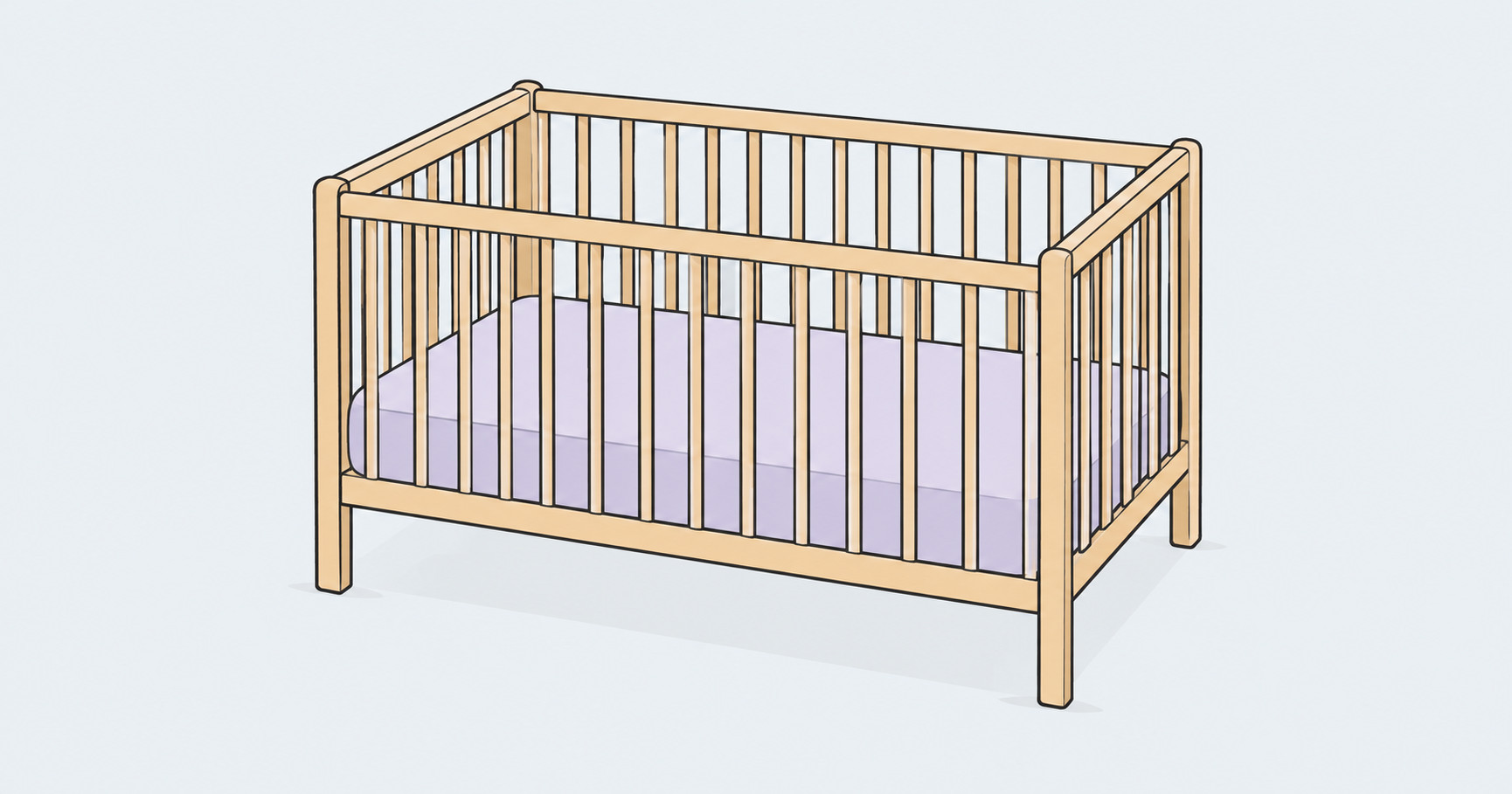
Choosing a cot can get lost among nursery colours, matching furniture and clever extras. Start with the part that matters most: a sturdy, compliant cot, the right firm mattress and a clear sleep space.
In Australia, a crib is usually called a cot. This guide covers choosing one, setting it up and knowing when to change the setup as your baby grows.
Start with current Australian safety requirements
From 19 January 2026, suppliers of new infant sleep products must comply with new Australian mandatory safety and information standards. These cover household cots, portable cots, bassinets and other products marketed for infant sleep. An overseas certification, attractive photograph or old product award is not enough to establish Australian compliance.
Ask the seller to identify the exact model, provide its assembly instructions and confirm compliance with the current requirements. Look for the required warnings and mattress specifications. The ACCC explains the current infant sleep-product standards.
The standards include design and testing requirements; parents cannot check all of these with a tape measure. Product compliance also does not remove the need for safe sleeping practices.
What to check before buying a cot
- The whole setup: confirm which mattress size and thickness the cot requires and whether that mattress is included.
- Condition and stability: check for damage, missing fittings, sharp edges, loose parts and secure locks.
- Practical access: try reaching into the cot at its lowest mattress setting. Consider your own mobility and recovery after birth without altering the cot to make access easier.
- Room fit: measure the space where it will stand, allowing clearance from cords, windows, heaters and furniture.
- Longer-term costs: if it converts to a toddler bed, ask whether the correct conversion kit is included or available separately. Convert it only as instructed when your child is ready.
These questions are more useful than a dated list of “best” brands. A higher price, storage drawer or decorative finish does not by itself show that a cot is safer.
Choose the mattress for that cot
Use one firm, flat, clean mattress in good condition, in the size and depth specified by the cot manufacturer. Red Nose advises a snug fit with no more than a 20 mm gap between the mattress and the cot sides and ends. Follow the product instructions as well; do not fill a gap with towels or padding.
Remove mattress packaging. Use a well-fitting sheet. If you use a waterproof protector, it should fit tightly and must not make the surface soft or padded. Avoid toppers, pillows and an extra mattress. See Red Nose mattress guidance.
Keep the sleeping surface level. Do not prop up the mattress for reflux, congestion or “better sleep”. Ask your baby’s clinician about symptoms rather than changing their sleep position.
Set up a clear sleep space
For every sleep, place your baby on their back with their head and face uncovered. Keep their cot in your room for at least the first six months. Keep the environment smoke-free before and after birth.
Use a correctly fitted sleeping bag with an appropriate neck and arm opening, arms free and no hood. If using a lightweight blanket instead, tuck it firmly below shoulder level, no higher than the chest, and place your baby’s feet near the end of the cot. Keep pillows, bumpers, doonas, soft toys and loose bedding out.
A cot does not need a nest, positioner or wedge. Do not attach items with cords that your baby could reach. Make sure everyone who cares for your baby knows the same setup. Red Nose’s six safe sleep recommendations also encourage breastfeeding where possible; safe sleep practices remain important however your baby is fed.
Drop sides, mattress levels and daily checks
Australian guidance does not say that every drop-side cot is banned. A compliant cot may have a drop side, but its mechanism must work correctly. Keep the side raised and securely locked whenever your baby is sleeping, and check it regularly.
Follow the assembly instructions and keep them for later. Check fittings regularly. Stop using a cot with a failed lock, damage or missing parts; contact the manufacturer for the appropriate solution rather than improvising a repair.
For a cot with adjustable mattress levels, move the base to its lowest position as soon as your baby can sit, pull or stand themselves up, or earlier if the instructions require it. The ACCC cot guide explains these checks.
What about a second-hand or portable cot?
Before accepting a second-hand cot, establish its model, current safety compliance, recall status and condition. Obtain the original instructions and all correct parts. Do not use an old family cot simply because it looks solid. If its safety cannot be established, choose another sleep space.
For a portable cot, follow the specific assembly and age, size and developmental limits. Check that it locks securely and that the mesh is undamaged. Use only the mattress supplied with it, even if it looks thin. Red Nose recommends portable cots for occasional or short-term use rather than as a permanent everyday cot. Read its portable cot guidance.
When is it time to move out of the cot?
Watch your child’s abilities rather than waiting for a particular birthday or height. Once they are trying to climb out and look capable of doing so, arrange a suitable bed and make the whole room safe for a child who can get up independently. Follow any earlier product limit.
A toddler bed or suitable firm floor mattress may be an option. Avoid gaps where a child could become trapped, and secure furniture and access to windows, stairs, cords and other hazards. Red Nose has a cot-to-bed guide.
For everyday settling alongside this equipment checklist, see our baby sleep and settling guide.