
Baby Bottles and Teats: Choosing, Cleaning and Safe Feeding
Table of Contents
Baby Bottles and Teats: Choosing, Cleaning and Safe Feeding
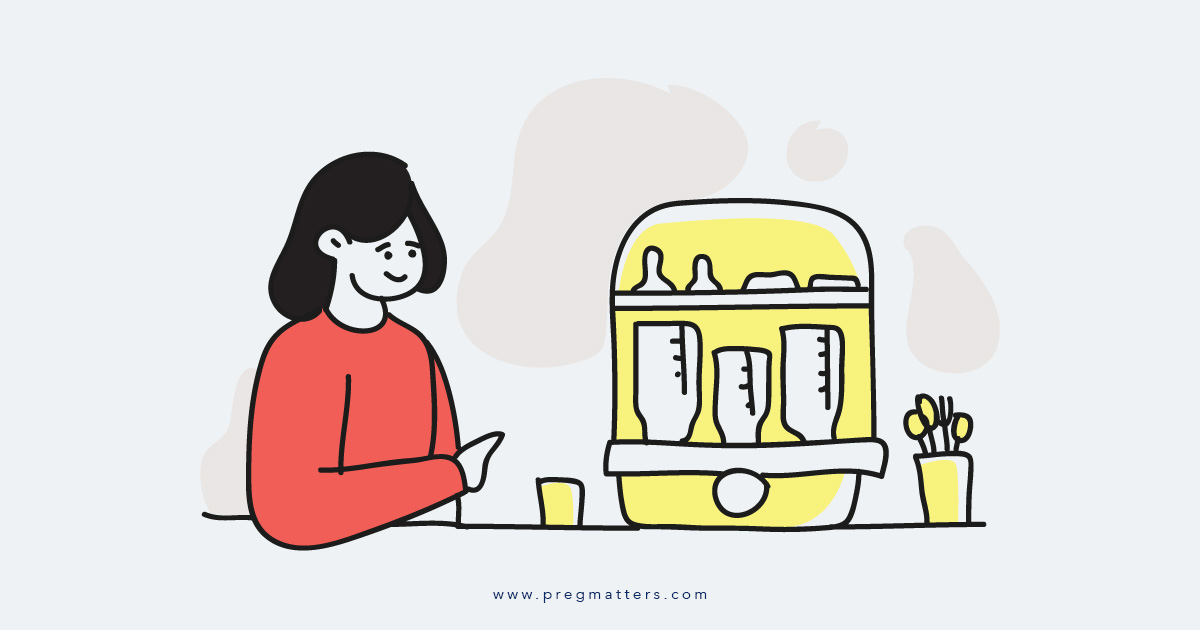
If you plan to bottle-feed, look for a bottle that is easy to clean, a teat your baby can feed comfortably from, and a cleaning routine you can manage. You do not need a cupboard full of different systems before you know what works.
Bottles can be used for expressed breastmilk or infant formula. In Australia, the soft part your baby sucks is usually called a teat; you may also see it labelled a bottle nipple.
Choosing a baby bottle
Start with a small number rather than buying a large set. Think about how often you expect to use bottles and when you will be able to wash and sterilise them.
- Easy cleaning: look for a simple shape with smooth inside surfaces. Extra valves and vents mean extra pieces to take apart and clean.
- Clear measurements: markings should be easy to read and durable.
- Compatible parts: use the teats, rings and other parts specified for that bottle, and follow its assembly instructions.
- Practical handling: choose something you can comfortably hold and fit into your cleaning equipment. Check the manufacturer’s instructions for the material and sterilising methods it allows.
A larger price tag or a teat described as “breast-like” does not establish that it will suit your baby better. There is no single best teat shape for every baby. If feeding is difficult, getting help with a feed is more useful than repeatedly buying new products.
Finding a comfortable teat flow
The age guide on the packet is a starting point. Watch how your baby manages the milk rather than moving to a faster teat simply because they have reached a particular age.
A flow that is too fast can leave a baby spluttering or struggling to keep up. A slow flow can make it hard to get milk. These signs do not prove the teat is the only problem, so ask your child and family health nurse or GP if feeds are repeatedly difficult, tiring or upsetting.
Use a commercially made teat with a suitable flow. Do not cut or enlarge the hole yourself. Check for damage during washing and replace a teat that is cracked or torn. Stop using a bottle that is cracked, chipped or otherwise damaged.
Clean first, then sterilise
Australian guidance recommends sterilising bottle-feeding equipment until your baby is 12 months old, including bottles used for expressed breastmilk. Sterilising does not replace washing away milk residue.
- Wash and dry your hands. Take the bottle apart, including its teat, ring, cap and any valves.
- Wash the pieces in hot, soapy water after each feed. Use a brush kept for feeding equipment to reach inside the bottle and around screw threads and small parts.
- Rinse thoroughly, then sterilise using a suitable method, such as boiling or a steam steriliser. Follow the equipment instructions and the full guidance for your chosen method.
- Handle clean equipment with clean hands, avoid touching inside surfaces, and store it as the sterilising instructions direct.
Keep hot water, steam and sterilising solutions away from children. If parts are dishwasher-safe, the dishwasher can help with washing, but it does not replace sterilising. Raising Children Network explains how to clean and sterilise feeding equipment, including storage after each method.
Safe, responsive bottle-feeding
Hold your baby close, with their head supported and their body slightly upright. Stay with them throughout the feed and allow pauses. Let them stop when they turn away or no longer want to suck; there is no need to finish the bottle.
Never prop a bottle in your baby’s mouth or leave them in bed with it. Do not use a microwave to warm milk, because it can heat unevenly and cause burns. Throw away milk left in the bottle after the feed.
Preparing formula and storing expressed breastmilk need their own careful steps. Follow the formula’s preparation instructions exactly and use current Australian guidance for the milk you are giving. If your baby was premature or has a medical condition, follow their treating team’s feeding plan.
When to get help
Talk to your child and family health nurse or GP if your baby regularly refuses feeds, coughs during feeds, or you are worried about their intake or growth. Seek urgent medical advice if they are feeding poorly and seem unwell or have fewer wet nappies than usual.
In Australia, call 000 if your baby has difficulty breathing, is turning blue or is unresponsive. For non-emergency advice, you can call Pregnancy, Birth and Baby on 1800 882 436.
For the rest of your feeding and care setup, see our new baby supplies checklist.
Sources and further reading
- Better Health Channel: bottle-feeding nutrition and safety
- The Royal Children’s Hospital: bottle feeding
- Raising Children Network: giving your baby a bottle
- Healthdirect: signs of serious illness in babies and children
- NHS: washing and sterilising feeding equipment
This is general information for families in Australia. Your baby’s health professional can help you choose an approach for their individual needs.